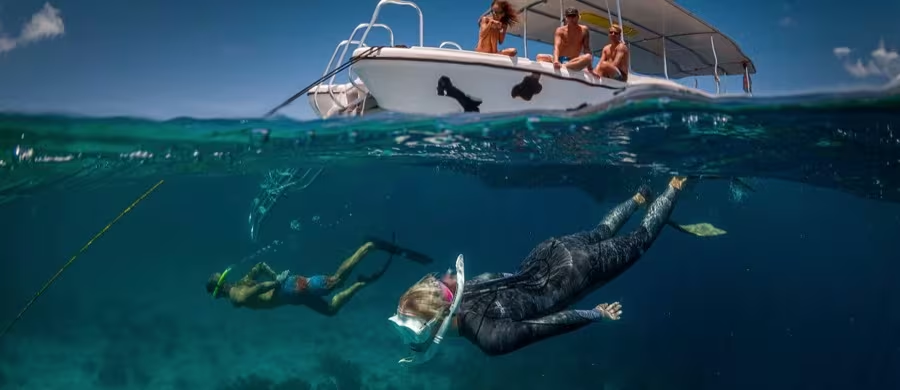
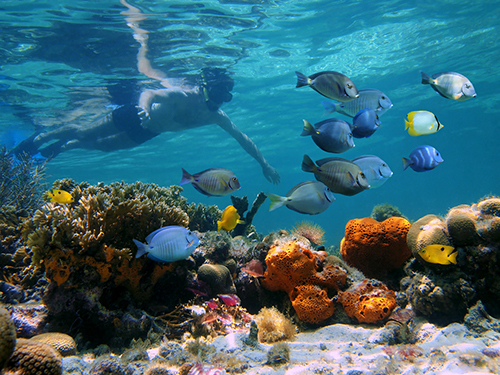
Here's what makes Bonaire different for snorkelers: the reef starts at the shore. No long boat rides, no reef "out there somewhere" — on most of the leeward coast you wade in, put your face down, and you're over living coral within a few fin-kicks. The whole coastline has been a protected marine park since 1979, which is exactly why it still looks this good.
Where to snorkel — honestly ranked
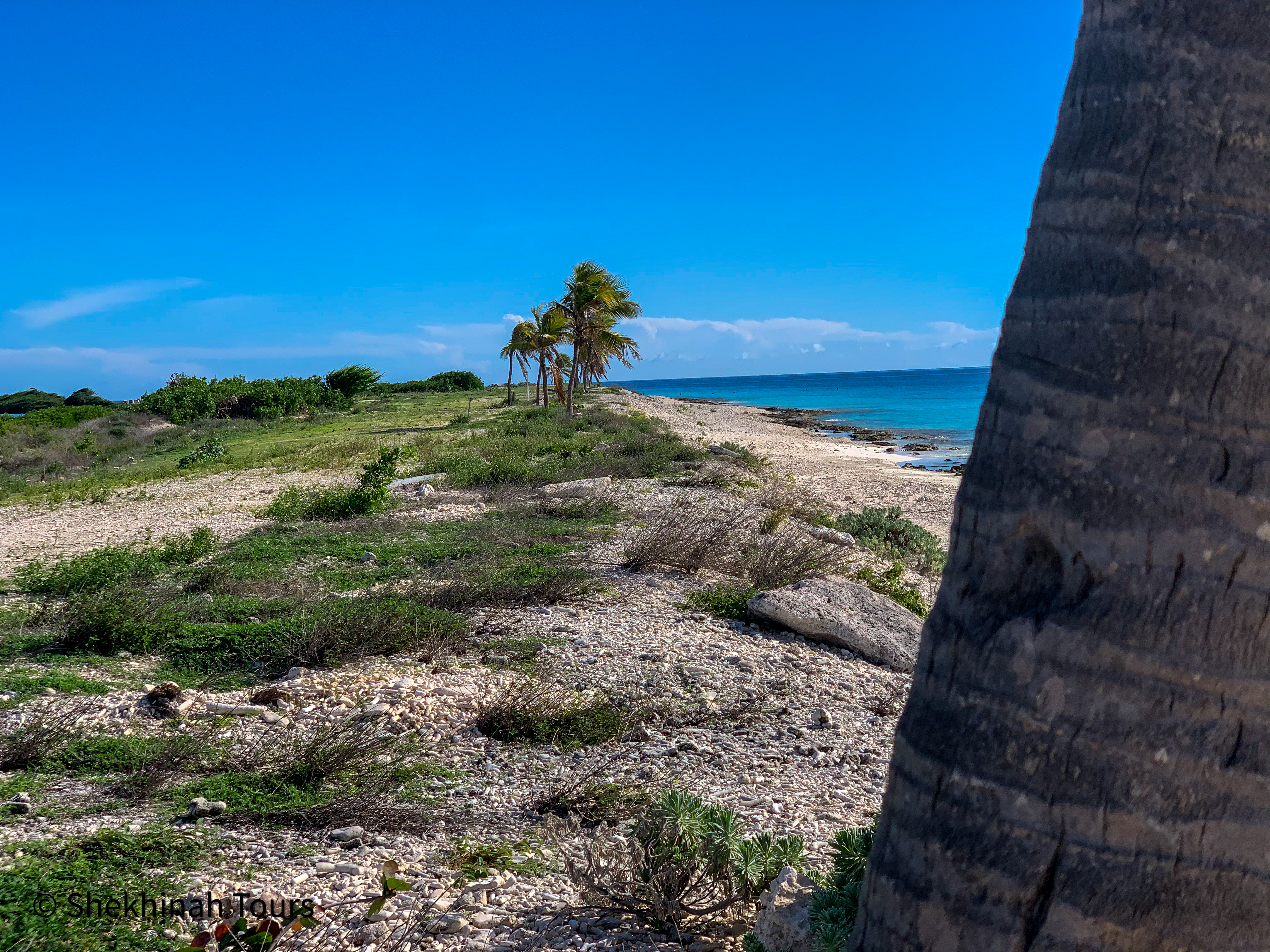
Klein Bonaire — the best, full stop. The uninhabited islet opposite Kralendijk has the island's clearest water and healthiest shallow reef, but you need a boat: a water taxi from the Kralendijk waterfront or a guided tour. No shade, no shops, no facilities on the island itself — bring everything. Full logistics in our Klein Bonaire guide.
1000 Steps. The famous limestone staircase (67 actual steps) on the north coast drops to a bright, shallow coral terrace. The climb back up in wet gear is the price of admission.
Andrea I & II. Neighbouring sites north of town with easy-ish entries and reliably good fish life close to shore. A local favourite for a quick morning swim.
Te Amo Beach. Near the airport, sandy patches between coral, and you can watch planes come in over the turquoise. Good for a casual snorkel rather than a mission.
Sorobon / Lac Bay shallows. Not a coral reef but a warm, waist-deep turquoise lagoon — the gentlest water on the island, ideal for nervous swimmers and kids getting used to a mask.
Guided or on your own?
Solo snorkeling is easy and free once you have wheels: drive the coast road, pick a yellow-marked site, swim. That freedom is the island's gift, and our getting around guide covers the rental question.
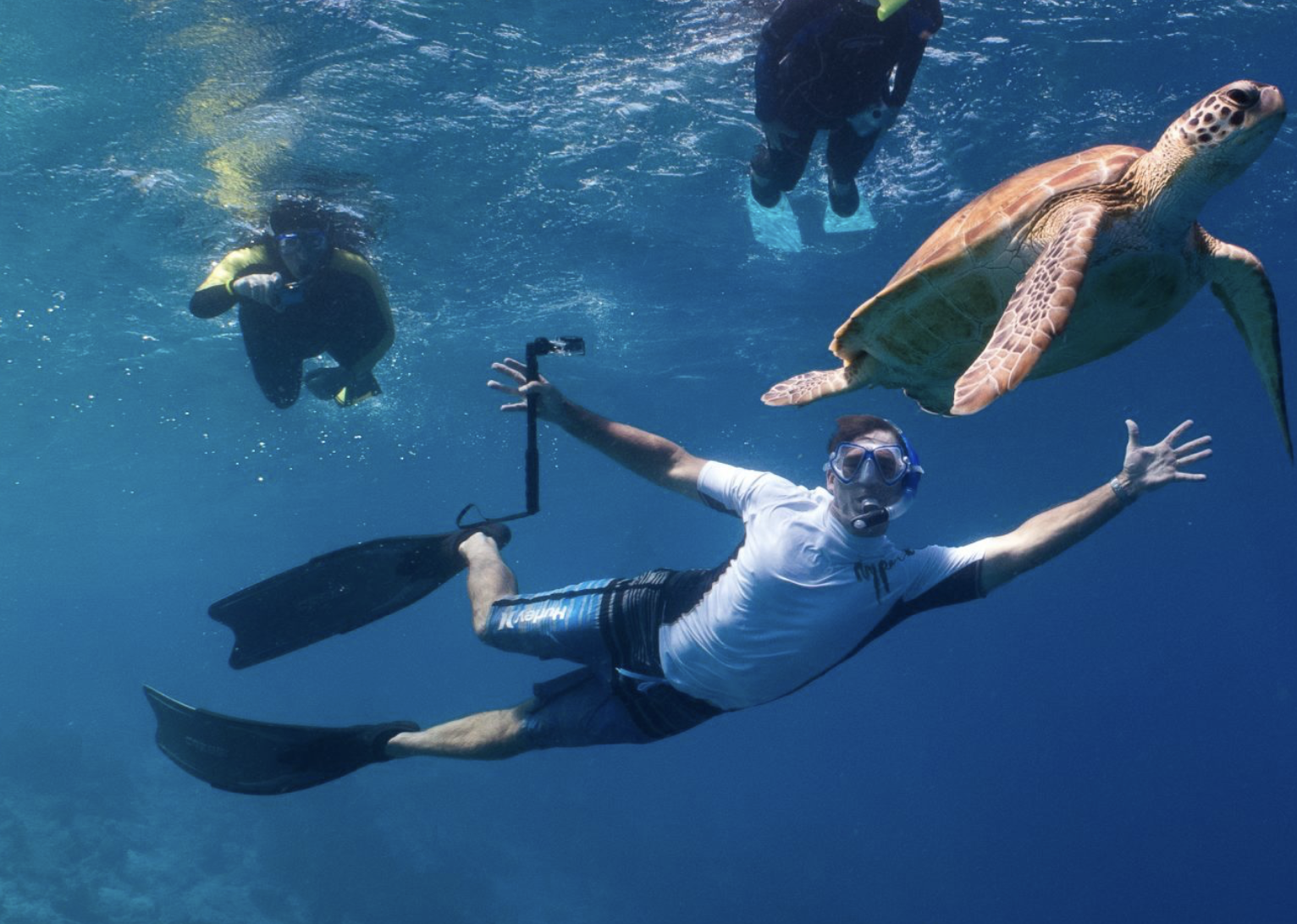
A guided trip earns its keep in two cases. First, Klein Bonaire — you need a boat anyway, and a guide puts you on the best stretch of reef at the right time. Second, your first day: a guide who swims these sites daily will show you more in an hour than you'd find alone in three, and handles the reef etiquette — no touching, no standing on coral, reef-safe sunscreen only.
One admin item before anyone gets wet: everyone entering the water pays the STINAPA nature fee. It's valid for the calendar year, buyable online, and it funds the marine park you're about to enjoy.
Book it
Snorkel trips worth your morning
From a budget guided swim to a speedboat double-header off Klein Bonaire — these are the trips local crews run daily and visitors rate highest.
FAQ
Can you snorkel from the beach in Bonaire?
Yes — that's the island's superpower. The protected reef begins right off the leeward shore at dozens of marked sites, so you can snorkel straight from land almost anywhere on the west coast.
Where is the best snorkeling in Bonaire?
Klein Bonaire, the uninhabited islet reached by water taxi or tour — the clearest water and healthiest shallow reef around. Best shore-based picks: 1000 Steps, Andrea I & II and Te Amo Beach.
Do snorkelers have to pay Bonaire's nature fee?
Yes. Everyone who enters the water pays the STINAPA nature fee — snorkelers and swimmers pay a lower rate than divers. It's valid for the calendar year; see our nature fee page for current details.
Is Bonaire snorkeling good for kids?
Very — with the right spot. Start in the calm, waist-deep water at Sorobon, then graduate to sandy-entry sites like Te Amo. Water shoes matter even more for small feet on coral-rubble entries.
Do I need water shoes in Bonaire?
Strongly recommended. Most shore entries cross coral rubble rather than soft sand, and water shoes or dive booties make getting in and out comfortable and safe.
Tempted to go a few metres deeper? Bonaire is one of the easiest places on earth to try a first dive — see the diving guide. Prefer to stay dry on the way out? Compare the boat trips.