
The top quarter of Bonaire is a national park — 14,000 acres of cactus desert, hidden coves, flamingo salinas and the island’s highest hill, managed by STINAPA since 1969. Washington-Slagbaai is the wildest thing you can do here without a boat, and it rewards exactly the visitors who prepare for it. This is how to do it properly.
- What it isNational park covering Bonaire’s wild north
- Getting inEntry gate near Rincon; linked to the STINAPA fee system
- DrivingRough dirt tracks — high clearance required
- Highest pointBrandaris, ~240 m — the whole island from one summit
Two routes, one rule
Inside the gate you choose between two one-way driving routes: a long route that traces the outer coastline (budget a full day) and a short route cutting through the interior (roughly half a day). Both are rough, rutted dirt tracks — this is where the double-cab pickup you rented for dive gear earns its keep. Low sedans and most compact cars aren’t suitable, and rental agreements tend to agree.
The one rule: go early. The park admits its last vehicles in the early afternoon (check STINAPA for current hours before you go), the routes are one-way with no shortcuts back, and the best light and coolest air belong to the morning. Locals arrive when the gate opens with a cooler in the truck bed.
The stops worth stopping for
- Wayaka II — a pocket cove with, ask any regular, the best snorkeling on the island. Steps carved into the rock take you into water that goes from bathtub-shallow to living reef in metres. Nature fee applies — sort your STINAPA fee beforehand.
- Boka Slagbaai — the old plantation harbour: ochre buildings, a swimmable bay, iguanas patrolling the picnic tables, and flamingos in the salina behind.
- The blowholes and east-coast bokas — on the long route, the windward stops crash and spray. Spectacular; not swimming water.
- Brandaris viewpoint / hike — the summit trail is a hot, hands-on scramble best started at first light; the reward is Bonaire, Klein Bonaire and on clear days Venezuela in one panorama. The drive-up viewpoints deliver most of the drama for less sweat.
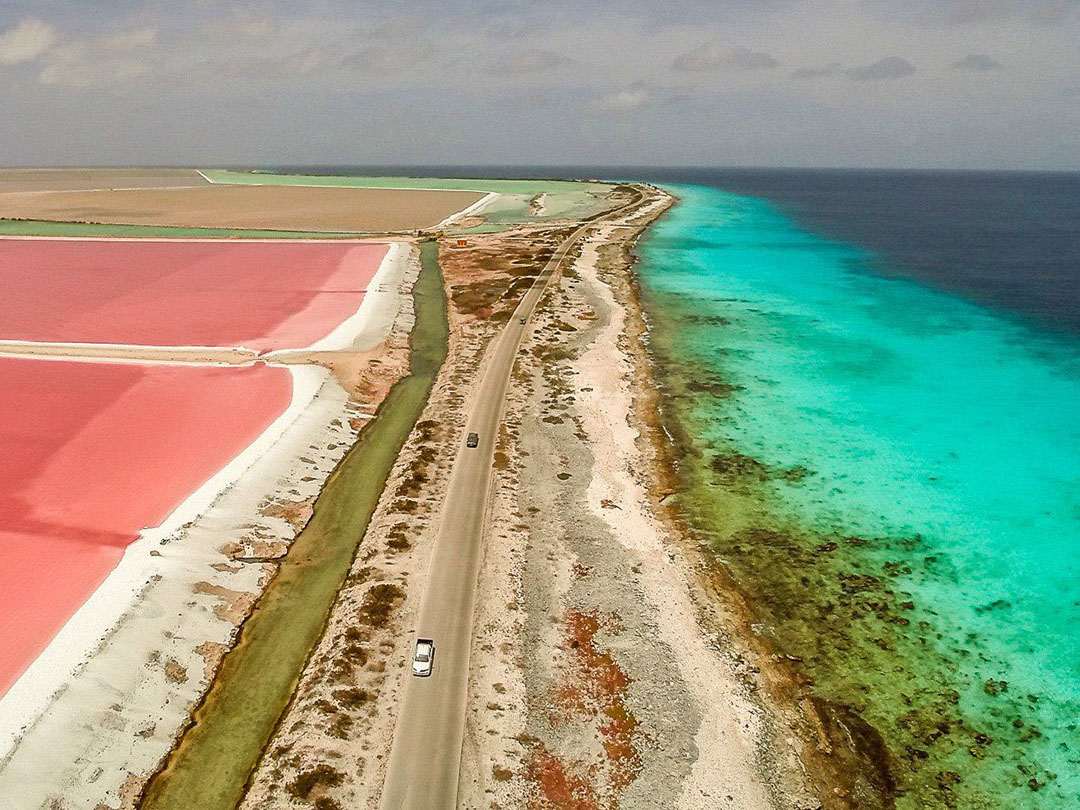
- Salinas along the way — the park’s salt flats hold flamingos most of the year. Engine off, stay in or by the car, and they’ll carry on ignoring you at close range.

Drive it yourself, or be driven
Self-driving is half the fun if you have the right vehicle and an early start. If you don’t — or you’d rather watch the landscape than the ruts — the guided park tour puts a local behind the wheel who knows every boka, backstory and flamingo pond, and you come home with the stories instead of the dust.

FAQ
Do you need a 4x4 for Washington-Slagbaai?
You need high clearance — the standard Bonaire double-cab pickup is ideal. Full 4×4 isn’t usually necessary in the dry season, but low sedans and small city cars are not suitable and may violate your rental terms. When in doubt, take the guided tour.
How long does Washington-Slagbaai take?
The short route is a solid half day; the long coastal route with swim and photo stops fills a full day. Either way, enter in the morning — last admissions are early afternoon and the one-way routes can’t be rushed.
Can you swim inside the national park?
Yes — Wayaka II and Boka Slagbaai on the sheltered west side are the classic swim and snorkel stops. The windward (east) side is dangerous water: admire the blowholes, stay out of the surf.
Is the Washington-Slagbaai entrance included in the nature fee?
Park entry is tied into the STINAPA fee system — check the nature fee guide and STINAPA’s site for how your fee covers the park and what to show at the gate.
What should you bring to Washington-Slagbaai?
More water than you think, snacks or a cooler lunch, snorkel gear, reef-safe sunscreen, closed shoes for the rocky stops, a full fuel tank and an offline map. There are no facilities once you’re past the gate.
The park fills day four of the 5-day itinerary perfectly. Coming from town, make a morning of it via Rincon — the secrets page explains why.