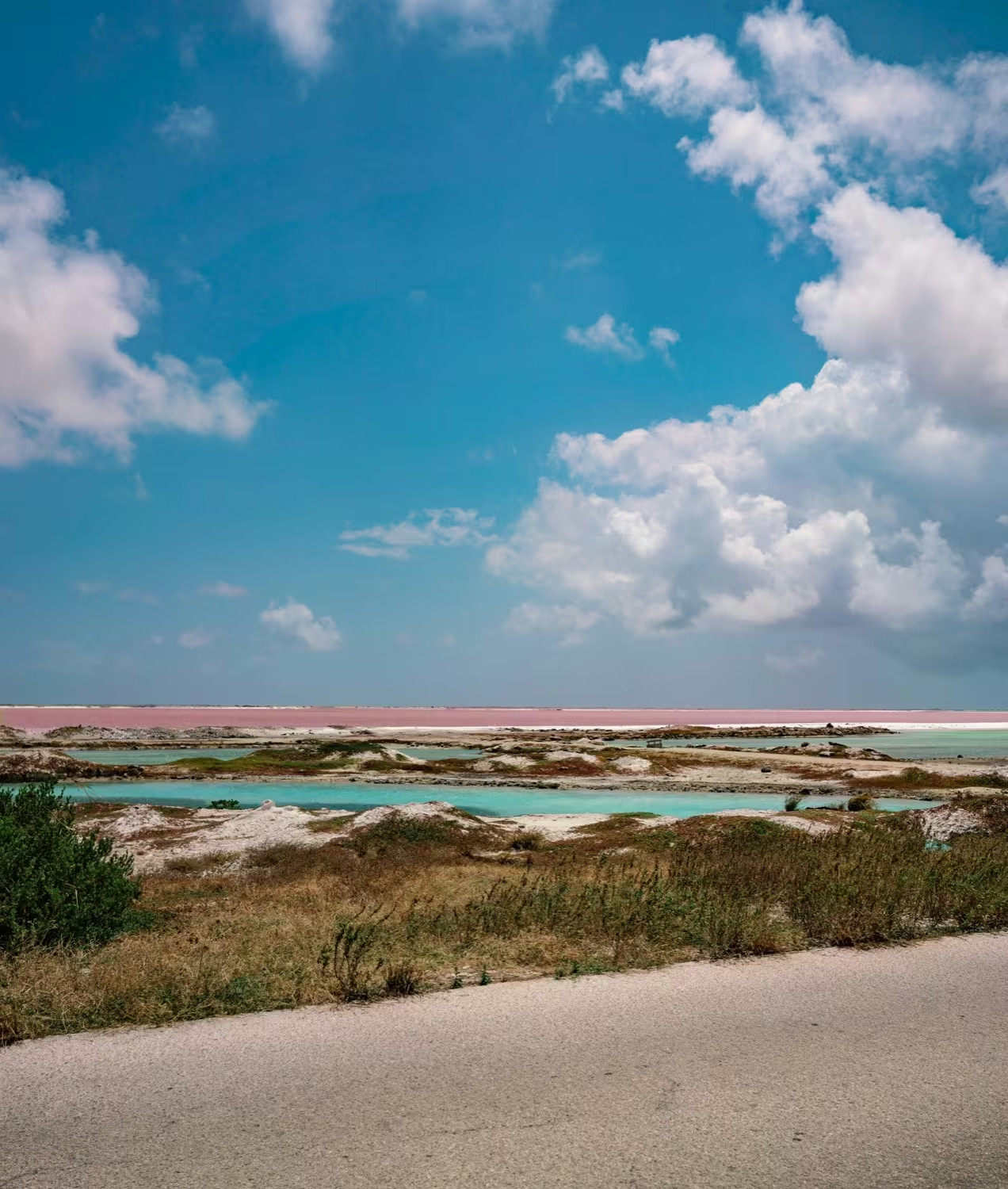
Here’s the honest answer up front: Bonaire is good every month of the year. It sits outside the hurricane belt, the temperature barely moves from 27–30 °C, and the water stays warm enough to dive in a shorty year-round. What changes through the year isn’t the weather so much as the crowds, prices and wind — and that’s what should drive your decision.
The two seasons that actually matter
High season (mid-December – April). This is when North Americans and Europeans escape winter, cruise calls peak and accommodation prices are at their highest. The weather is glorious — dry, breezy, slightly cooler nights — but popular boat trips and dive courses book out days ahead. If you’re coming in this window, reserve your Klein Bonaire trips and courses before you fly.
Low season (May – November). Quieter, noticeably cheaper, and — this is Bonaire’s trump card — still reliably sunny. Because the island lies south of the hurricane belt, the Caribbean’s storm season barely touches it. September and October are the calmest, emptiest months: reef conditions are glassy, operators have space, and you’ll have dive sites to yourself.
Month by month
| Months | Weather | Crowds & prices | Good for |
|---|---|---|---|
| Jan – Mar | Dry, breezy, 27–29 °C | Peak season, highest prices | Escaping winter; book everything ahead |
| Apr – May | Dry, wind easing | Tapering off after Easter | Great all-rounder; shoulder-season rates |
| Jun – Aug | Warm, windiest months | Moderate (family summer bump) | Windsurfing at Lac Bay; long days |
| Sep – Oct | Hottest, calmest sea | Quietest of the year | Divers & snorkelers — prime visibility |
| Nov – mid Dec | Occasional short showers | Quiet until the holidays | Value hunters; green(er) island |
Sea temperature stays roughly 26–29 °C all year. Trade winds blow most of the year and peak May–August — that’s a feature at Lac Bay and a small factor on east-coast trips.

Deciding by what you came for
- Diving & snorkeling: any month works; September–October offer the calmest water and best visibility, and you skip the crowds.
- Windsurfing & kiting: May–August, when the trades blow hardest across Lac Bay.
- Lowest prices: September–November, outside school holidays.
- Flamingo watching: year-round residents, with bigger flocks in and after the rainy months (roughly November–March) when the salt flats fill.
- Avoiding cruise crowds: ships call mostly October–April. Kralendijk gets lively on ship days; the rest of the island barely notices. Boat tours marked “cruise friendly” fill first on those days.
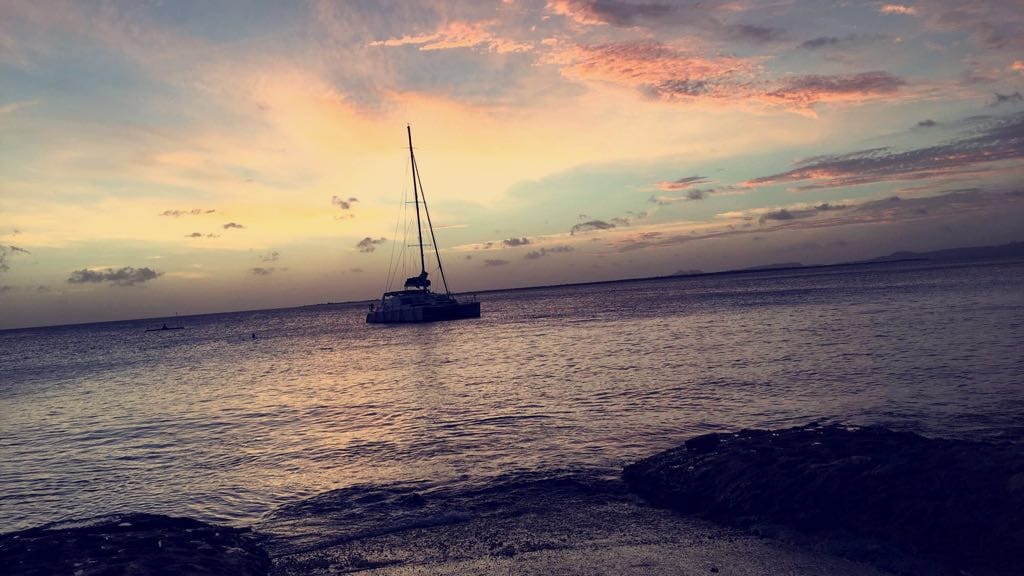
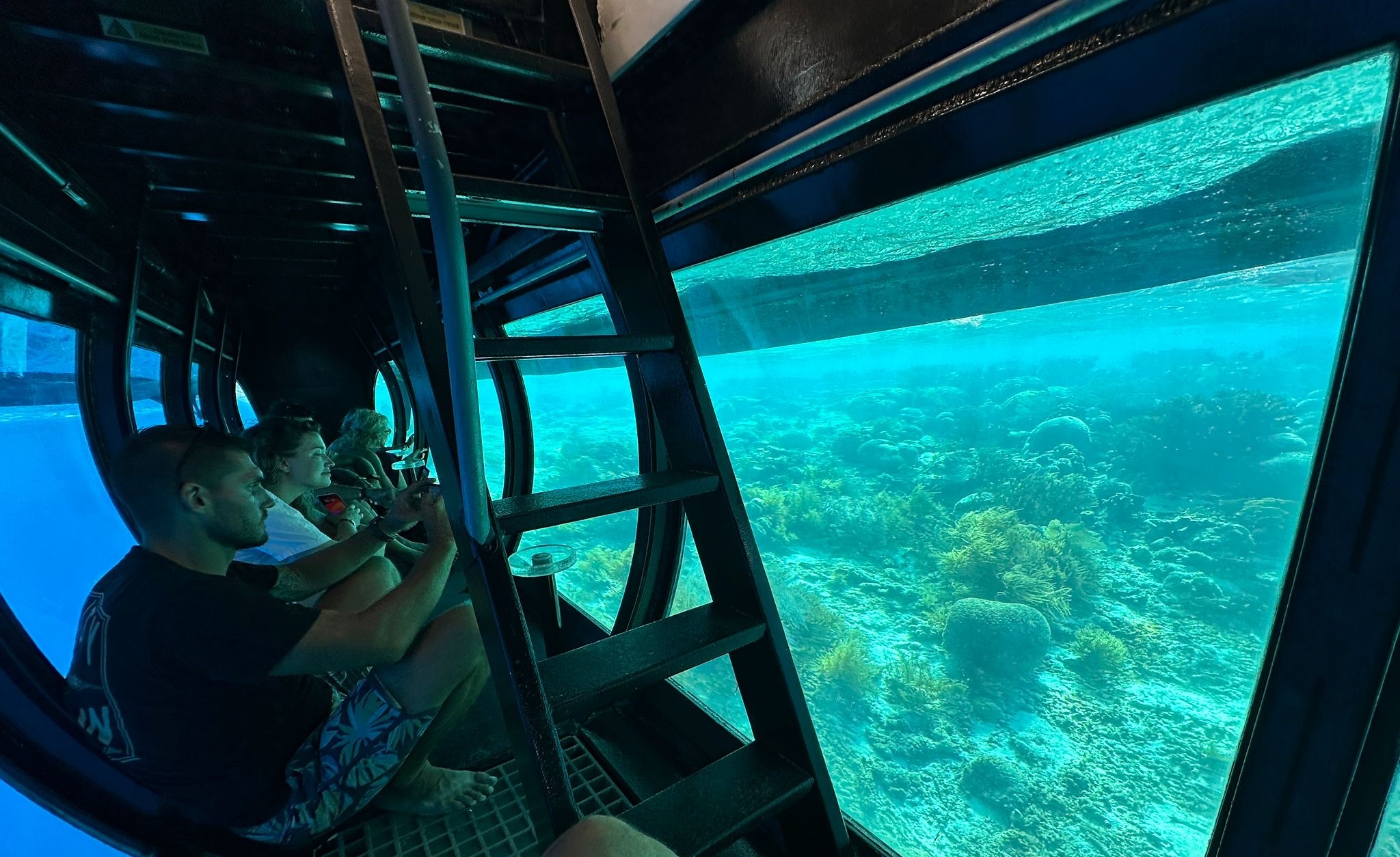
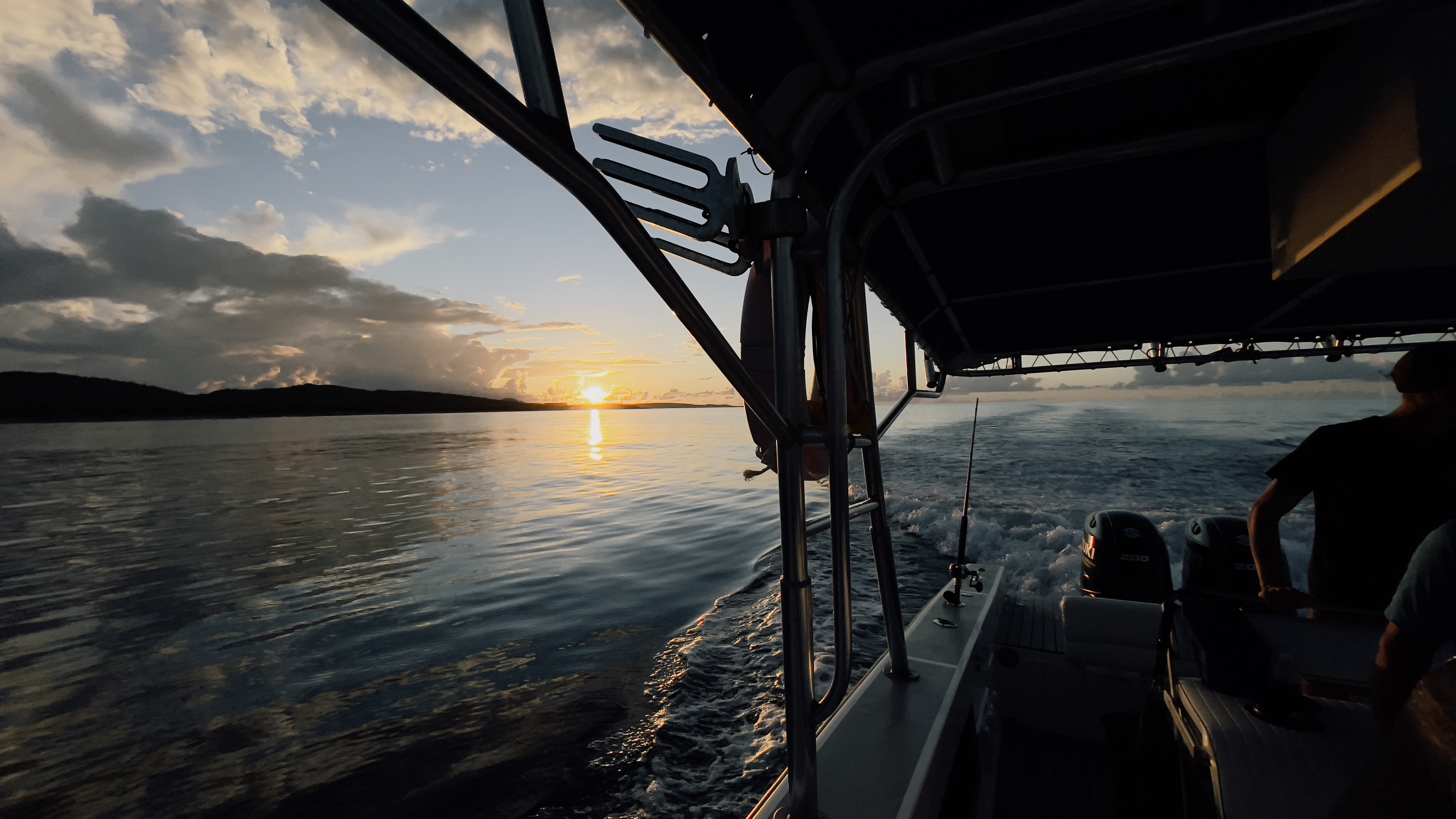
Whenever you come, one golden-hour experience belongs on the list — the light over Klein Bonaire at sunset is the island at its best:
FAQ
What is the best month to visit Bonaire?
For most travellers: April–May or September–October — dry, warm weather with smaller crowds and better prices than the December–March peak. Divers particularly love September and October for calm, clear water.
Does Bonaire get hurricanes?
Direct hits are extremely rare. Bonaire lies south of the Atlantic hurricane belt, which is why autumn — risky elsewhere in the Caribbean — is actually a lovely, quiet time here.
When is Bonaire’s rainy season?
Roughly October through January, but “rainy” is generous: the island is semi-arid and showers are short, often overnight. Annual rainfall is a fraction of what greener Caribbean islands get.
When is cruise season in Bonaire?
Ships call mainly from October to April, docking right in Kralendijk. On multi-ship days the town centre and Klein Bonaire trips are busiest — day-trippers are gone by late afternoon.
Is Bonaire windy?
Pleasantly, yes — steady trade winds keep the heat comfortable and peak May–August. The leeward (west) coast, where all the diving and swimming happens, stays calm; the wind is mostly something you feel, not something that ruins plans.
Dates picked? Next: getting to Bonaire and choosing your base — or jump straight to the itineraries.