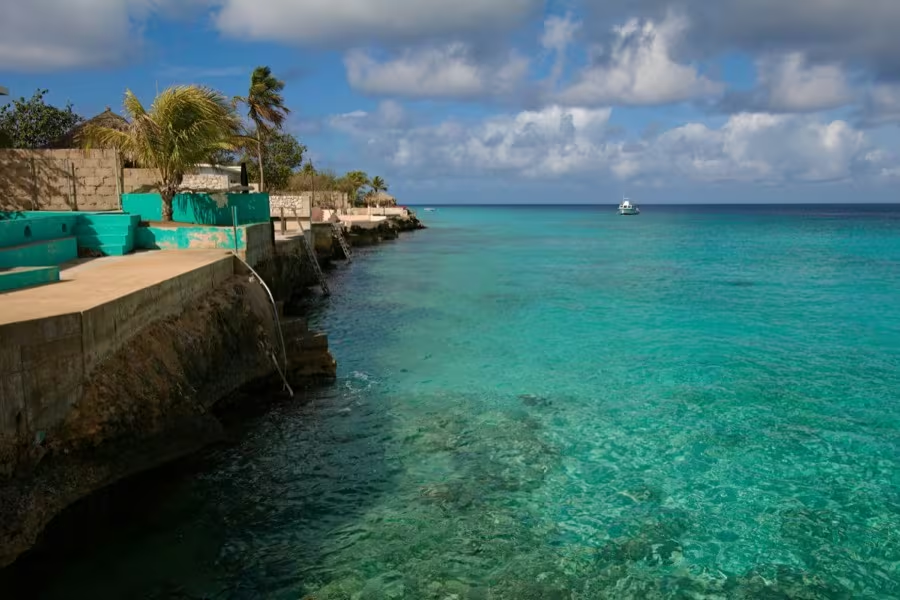
Divers have voted Bonaire the shore-diving capital of the world for decades, and the reason is simple: the entire coastline has been a protected marine park since 1979, so the reef is healthy from the waterline down. More than 60 marked sites line the leeward coast, each announced by a painted yellow stone at the roadside. You drive up, gear up, walk in. No boat schedule, no group, no waiting.
- Marine park since1979 — the whole coast
- Dive sites60+ marked shore sites
- Water temperature26–29 °C year-round
- Signature diveHilma Hooker wreck
- RequiredSTINAPA nature fee
How diving works here
Bonaire runs on a routine you won't find anywhere else. You rent a double-cab pickup truck, collect tanks from your dive operator — most offer unlimited air packages with drive-through tank exchange — and then the island is yours. Two dives before lunch at sites you picked off a map, a surface interval with a food-truck sandwich, a third dive wherever the mood takes you. Buddy pairs set their own schedule entirely.
That freedom is why divers come back year after year. It also means you're your own divemaster: check conditions, plan conservatively, and if you're new to the island, do your first dive with a guide to learn how entries and navigation work here. Rental pickups are covered in our getting around guide.

The icons
Hilma Hooker. A sunken freighter on the sandy bottom of the south coast — Bonaire's most famous wreck dive and a rite of passage for visiting divers.
1000 Steps. The north coast's postcard site — a limestone staircase (actually 67 steps, though they feel like more with tanks on) down to a bright terrace of coral. Worth it for the view alone.
Klein Bonaire. The uninhabited islet across from Kralendijk is the exception to the shore-diving rule: its steep, pristine reefs are reached by boat, and most operators run regular trips. More in our Klein Bonaire guide.
Salt Pier. Coral-crusted pilings and shoals of fish beneath a working pier in the south. Access depends on pier operations and current rules, so ask your dive operator about the current status rather than counting on it.
Never dived before? Start here
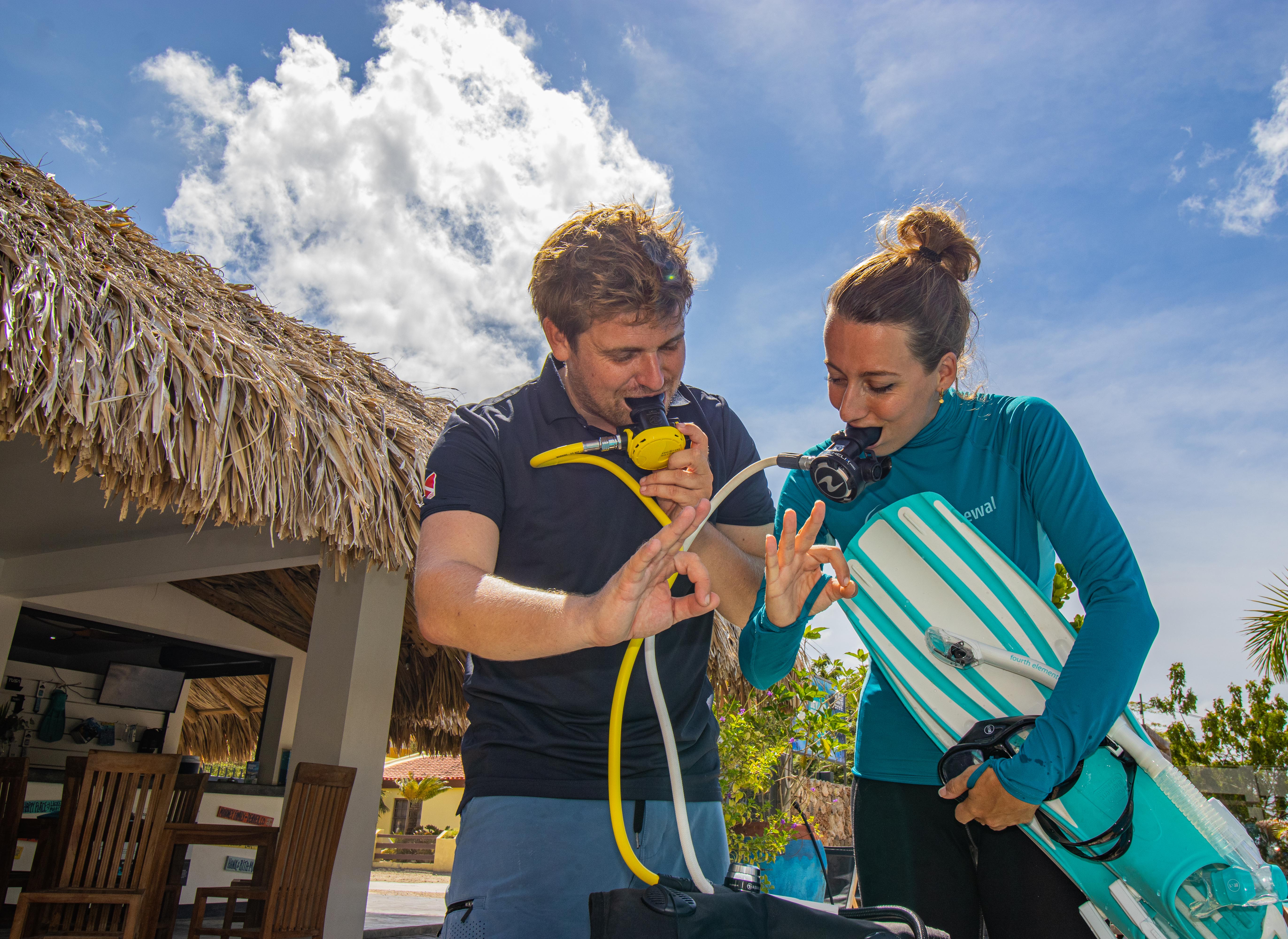
Bonaire's calm, clear, warm water is about the friendliest classroom on earth. A Discover Scuba experience gets you breathing underwater the same day, no certification needed:
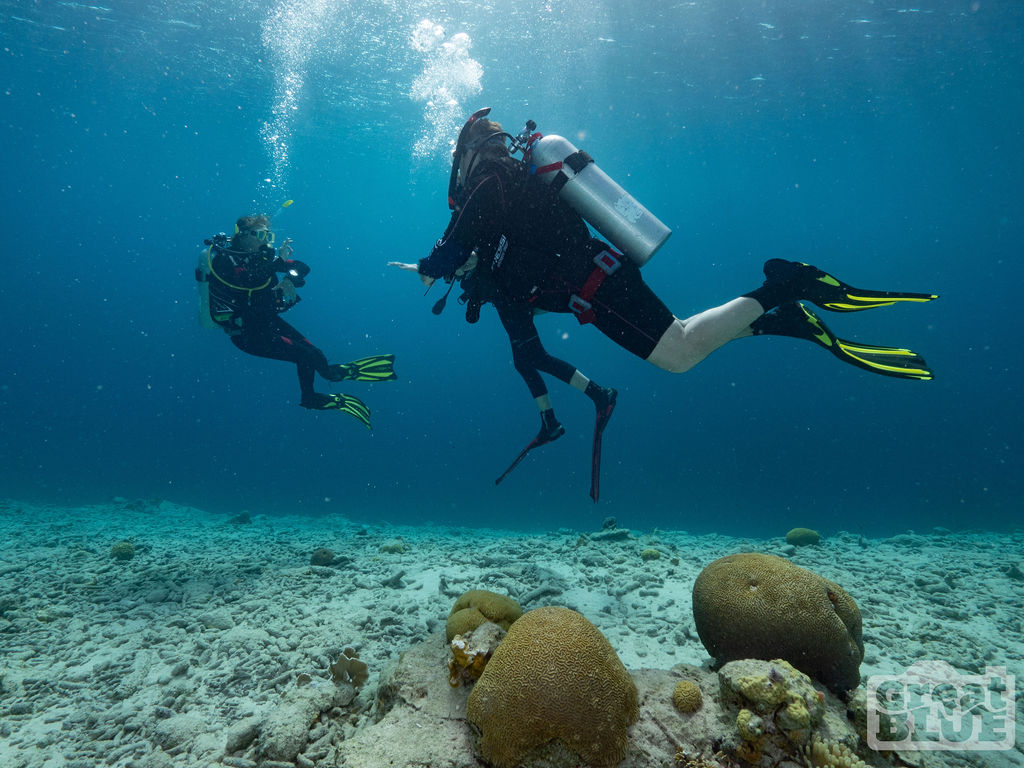
Ready to make it official? The island is a popular place to earn a full certification, because course dives happen on the same easy shore reefs you'll enjoy for the rest of the trip:
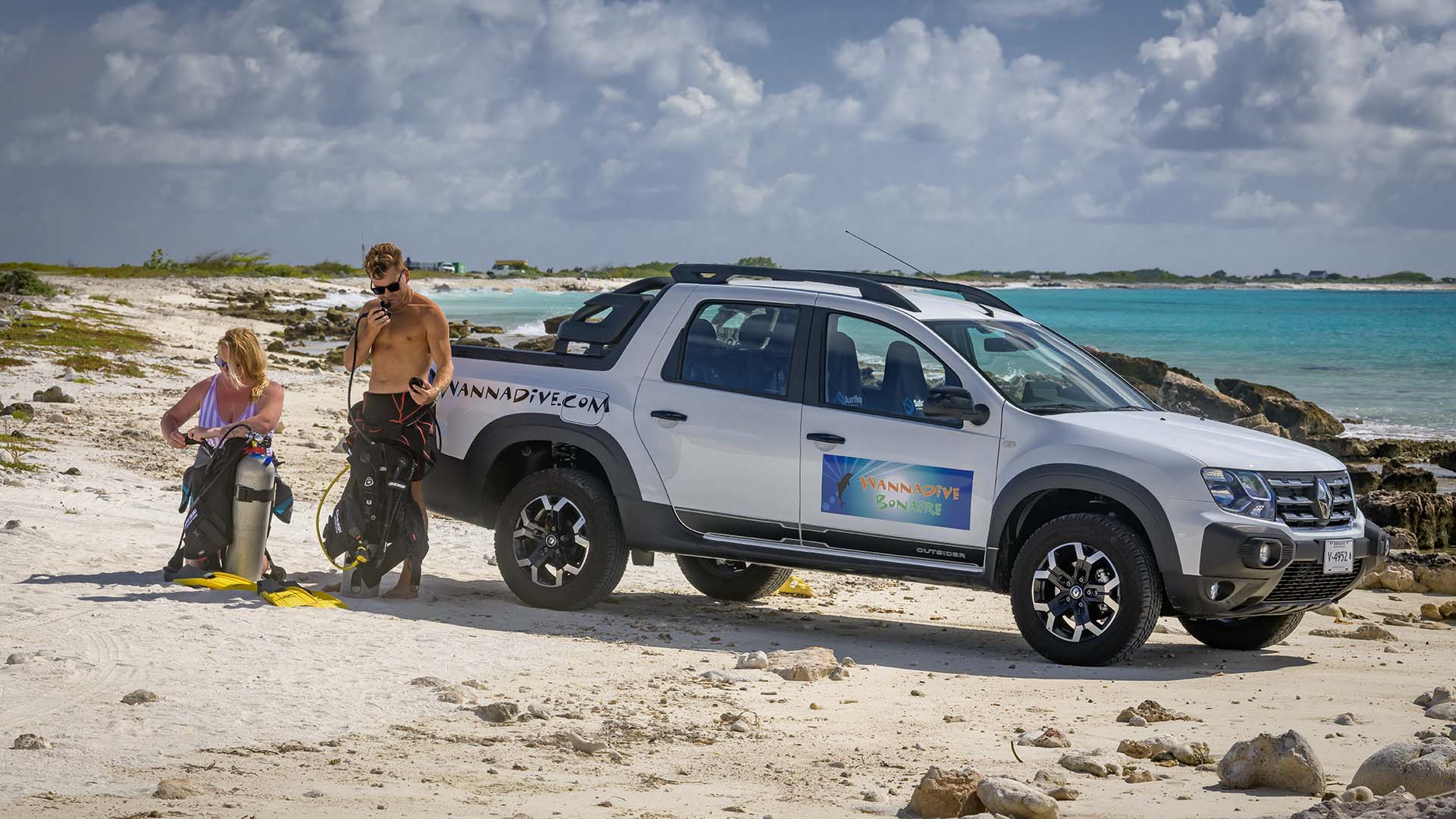
Already certified but new to the island? A guided shore dive is the smart first splash — you'll learn local entries, navigation and etiquette from someone who dives these sites daily:
The rules that keep the reef alive
Everyone entering the water pays the STINAPA nature fee — divers pay a higher rate than swimmers, it's valid for the calendar year, and you can buy it online before you arrive. Beyond that, the marine park rules are non-negotiable and enforced by culture as much as by rangers:
- No touching anything, alive or dead — and no gloves, which invite touching.
- Perfect your buoyancy; never stand on or kick coral.
- Take nothing, not even empty shells.
- Reef-safe sunscreen only.
- Boats use moorings — never anchor.
FAQ
Why is Bonaire called the shore diving capital of the world?
Because the protected reef runs right along the accessible leeward coast, with 60+ marked entry points you can drive to. Nowhere else combines that density of easy shore sites with reef this healthy — the marine park has been protecting it since 1979.
Do I need a boat to dive in Bonaire?
No — the vast majority of diving is done from shore with a rental pickup and tanks. The main exception is Klein Bonaire, whose reefs are reached by boat trips that most operators run regularly.
Can beginners dive in Bonaire?
It's one of the best places anywhere to start. The water is warm, calm and clear year-round, entries are easy, and Discover Scuba experiences and full certification courses run constantly.
Do divers need to pay the nature fee?
Yes — everyone entering the water pays it, and divers pay a higher rate than swimmers and snorkelers. It's valid for the calendar year and buyable online. Details and current rates via our nature fee page.
Is the Hilma Hooker suitable for new divers?
It's a deeper dive than the reef terraces, so it suits divers comfortable at depth. If you're newly certified, do it with a guide — and there are dozens of shallower sites that are just as rewarding.
Travelling with a snorkeler? The same reefs work without a tank — see our snorkeling guide. And for the days between dives, there's the whole things to do list.